If you’ve ever ordered flexible packaging rollstock from my facility, you know there’s far more to the final product than meets the eye. A lot of that “invisible work” happens inside the printing process—and the single most critical component behind that work? The ink. For a flexible packaging rollstock supplier, I’ve lost count of how many times potential clients come to us thinking all printing inks are interchangeable. They’ll say, “We used a generic ink before” or “The printer down the street charges less for their inks” without stopping to ask: Do those inks even work with your specific rollstock, your product, and the environments your packaging will face? Flexible Packaging Rollstock

Over 12 years in this business, I’ve seen what happens when the wrong ink is picked for a job. We once had a small food manufacturer come to us in a panic: their rollstock’s ink smudged off on store shelves, and consumers were complaining about “sticky” granola bar wrappers. It turned out they’d chosen a water-based ink designed for plain paper, not the multi-layer polypropylene rollstock we’d produced for them. That mistake cost them thousands in product returns, and they almost took their business to a competitor before we walked them through a step-by-step selection process. Today, they’re one of our most loyal clients. That’s why I’m sharing what I tell every new prospect, technician, and small business owner who’s sorting through ink options for flexible packaging rollstock. It’s not just about color or cost—it’s about science, compatibility, and real-world performance.
Let’s start with the basics: flexible packaging rollstock isn’t a single material. It’s a built-up structure, usually 2 to 5 layers, each with a specific job. There’s a base layer (often polypropylene, polyester, or polyethylene terephthalate) for strength, a sealant layer (usually low-density polyethylene or linear low-density polyethylene) for heat-sealing shut, and sometimes a barrier layer to block oxygen or moisture. That stack-up is non-negotiable for a client’s product—think of chips needing a moisture barrier to stay crisp, or coffee needing an oxygen barrier to keep flavor. And your ink has to adhere to the surface of that base layer without cracking, peeling, or rubbing off.
This is where the biggest mistake happens: ignoring the ink’s substrate compatibility. Let’s break down the major ink types and which rollstock they’re made for. First, water-based (WB) inks are the most sustainable option right now, and they’re designed for porous surfaces—like paper, uncoated cardboard, or even corona-treated polyethylene (PE) that’s been treated to boost surface energy. Wait, “corona-treated” is a key term here; if your rollstock’s base layer is PE, it needs a corona discharge treatment to raise its surface tension from too low (which repels ink) to a number high enough for WB inks to stick—usually 38 dynes per centimeter or above. The problem? If your rollstock is a non-porous surface like polyester (PET) or biaxially oriented polypropylene (BOPP), WB inks won’t form a strong bond. They’ll dry on top of the surface instead of sinking in, and a light rub will wipe them right off.
Then there’s solvent-based (SB) inks, which have been around for decades. These use organic solvents to dissolve the pigment, and they work really well for non-porous substrates like uncoated BOPP or PET—just not for PE, because the solvents will etch too deep into the sealant layer and ruin its ability to heat-seal. That’s a recipe for packaging failure: if your sealant layer is damaged, your bags will leak, and food will spoil. SB inks are also regulated in most places now because their volatile organic compounds (VOCs) contribute to air pollution, so many clients are moving away from them. But for certain high-barrier medical packaging rollstock, they’re still the only option that holds up to sterilization processes.
Last, UV-curable (UV) inks, the newest of the three, cure instantly when exposed to ultraviolet light—no solvents, no water, just pigment and a photoinitiator that triggers the reaction. These are incredibly durable: they resist scuffs, moisture, and even harsh chemicals like cleaning products, which makes them perfect for personal care packaging or outdoor goods that will sit on construction site shelves. The catch? UV inks need a completely clean substrate—any dust or residue on your rollstock’s surface will prevent the curing process, leaving ink that rubs off before it’s even boxed up. I’ve had a printer accidentally run rollstock through a dirty unwashed machine, and their UV ink cured unevenly; half the order had to be scrapped, which cost them more than the money they saved by skipping a quick equipment clean.
Once you match ink type to substrate, the next step is linking the ink to your product’s real-world conditions. This isn’t a “one-size-fits-all” conversation. For example, if you’re packaging frozen seafood, your rollstock and ink have to handle extreme cold—like -20°F cold. If you pick an ink that’s too brittle, it will crack when the packaging is folded or shipped, exposing the product to freezer burn and ruining the brand’s image. I once worked with a seafood distributor who chose a cheap solvent-based ink; when their product left the freezer, the ink bubbled and peeled within a week of being stocked in grocery freezers. They had to recall 10,000 pounds of fish, which cost them $40,000. That’s a far bigger hit than choosing a slightly more expensive cold-cured UV ink upfront.
Another big factor: food safety. If your rollstock is going to touch food, the ink can’t leach chemicals into the product. That’s not just a regulatory box to check—it’s a trust issue with consumers. Most countries, including the U.S. and EU, have strict standards for food-contact packaging inks, and as a supplier, we only work with ink vendors that are FDA-approved or EU food-compliant. I’ve heard horror stories of small startups choosing unapproved inks, only to have their entire packaging line seized by customs before they could launch their product. Even if you’re not shipping internationally, local health departments will test packaging if there’s a complaint, so skimping here is a losing game.
Cost is obviously on everyone’s mind, but I always tell clients: don’t pick the cheapest ink. The “cheap” ink might cost 10% less per gallon, but if it causes 5% of your production run to be scrapped, that’s a way bigger cost than the ink savings. Let’s do the math: a 10,000-pound roll of BOPP rollstock costs about $2,000. If you use an ink that has a 5% adhesion failure rate, that’s 500 pounds of rollstock wasted—$100 down the drain, plus the cost to reprint, plus the delay to your order. A higher-quality ink with a 99% adhesion rate might cost $50 more, but it saves you $100 in waste and no delay. That’s a no-brainer.
Wait, there’s one more thing I always bring up: the printing process itself. Flexographic printing, which is the most common method for flexible packaging rollstock, uses raised rubber plates to transfer ink. That means the ink has to flow just right—too thick, and it will create uneven prints with smudges; too thin, and the pigment will be too light. I’ve worked with printers who brought their own “custom” inks that were too thin, and we had to adjust our rollstock’s surface treatment to make the ink stick. Some printers won’t adjust their process, so matching the ink to both your rollstock and your printer’s setup is make-or-break. If you’re a small business that doesn’t have a permanent printer yet, our team can connect you with trusted local printers that have experience working with our rollstock and the right ink types for your project.
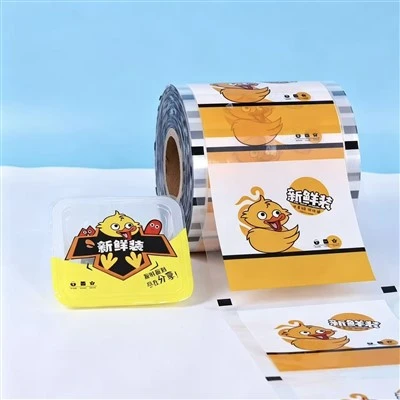
I know this sounds like a lot of moving parts, and it can be overwhelming if you’re not familiar with packaging science. That’s why I never leave a potential client hanging. If you’re sorting through options for your next flexible packaging rollstock order, you don’t have to figure this out alone. Reach out to our team to discuss your product, your rollstock structure, and your needs, and we’ll walk you through every step—from substrate compatibility to ink performance testing, to making sure your final packaging meets all regulatory standards. We’ve worked with small craft brands, large food manufacturers, and medical device companies, so no project is too big or too small.
Octagonal Sealed Bag I’ve spent 12 years learning that the best flexible packaging isn’t just about looking good on a shelf—it’s about protecting your product, building consumer trust, and keeping your business running smoothly. The ink is the bridge between your brand’s design and all of that. Don’t let a wrong ink choice turn a great product into a headache. Let’s talk through your project.
References
- Flexible Packaging Association. (2022). Ink Compatibility Guidelines for Flexible Packaging. FPA Technical Standards Series.
- European Flexible Films and Foils Association. (2021). UV-Curable Inks for Non-Porous Substrates: Performance Testing Protocols.
- U.S. Food and Drug Administration. (2020). Food Contact Substances: Ink Requirements for Flexible Packaging. FDA Center for Food Safety and Applied Nutrition.
Dongguang County Sansheng Plastic Packaging Co., Ltd.
Dongguang County Sansheng Plastic Packaging Co., Ltd. is one of the most professional flexible packaging rollstock manufacturers and suppliers in China, also supports customized service. Welcome to buy advanced flexible packaging rollstock made in China here and get quotation from our factory. Quality products and low price are available.
Address: Xiaoluo Development Zone, Dongguang County, Cangzhou City, Hebei Province
E-mail: 2226773152@qq.com
WebSite: https://www.sanspackagingbags.com/
