If you’ve ever walked into a pharmaceutical manufacturing clean room, sipped water from a lab-grade purification apparatus, or even visited a semiconductor fabrication plant, you’ve encountered a product dependent on ultrapure water — and at the heart of most modern ultrapure water systems is the technology I’m proud to provide: the EDI, or Electrodeionization, pure water system. As an EDI system supplier, I get asked this question all the time: “How does an EDI pure water system actually work?” It’s a fair question, because the technology blends elements of reverse osmosis, ion exchange, and electrochemistry in a way that feels almost like magic to someone who hasn’t dug into the details. EDI Pure Water System
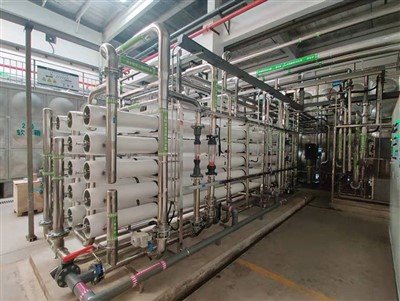
Let me start with a quick reality check: not all “pure water” is the same. For a standard home water filter, removing chlorine and sediment gets the job done. But for industries like biotech, where even trace amounts of dissolved ions can ruin a vaccine batch, or semiconductors, where a single metal ion on a silicon wafer can render an entire computer chip useless, water needs to be far, far purer. That’s where EDI systems come in — they fill the gap between what reverse osmosis (RO) can deliver and the 18.2 megohm-cm resistivity standard required for Type 1 pure water, the gold standard for these critical applications.
Before we dive into EDI’s inner workings, let’s set the stage by talking about the traditional purification methods EDI replaced. For decades, manufacturers relied on mixed-bed ion exchange resins to polish RO permeate into ultrapure water. This process works by passing water through tiny resin beads that attract and trap dissolved ions, swapping them for hydrogen and hydroxide ions to neutralize contaminants. But mixed-bed systems have a big downside: they’re finite. Once the resin beads are saturated with ions, you have to take the system offline, remove the old resin, and regenerate it with harsh acids and bases. That’s messy, labor-intensive, and produces large volumes of chemical waste — not to mention the downtime that costs industries thousands of dollars a day.
EDI was developed in the 1950s as a way to fix that. Instead of relying on disposable, regenerable resin, EDI uses electricity to pull ions out of water continuously, no chemicals required. It’s a continuous process, so there’s no downtime for regeneration, and it generates almost zero hazardous waste. That’s why, over the past 20 years, EDI has become the backbone of modern pure water production, and why my team and I focus on refining these systems to work reliably in even the harshest industrial environments.
So, how does it all fit together? Let’s break down an EDI system step by step. A standard EDI setup is part of a larger water purification train, right after an RO system. The RO permeate — which already has 95 to 99 percent of dissolved ions removed — enters the EDI module as feed water. That feed water first flows through a stack of alternating anion and cation exchange resin compartments, separated by ion-exchange membranes. These membranes are key: cation membranes only allow positively charged ions (like sodium, calcium, or magnesium) to pass through, while anion membranes only let negatively charged ions (like chloride, sulfate, or nitrate) through.
On either side of this resin stack are two electrodes: a cathode (negative) on one end and an anode (positive) on the other. When you turn on the power, an electrical current flows from the anode to the cathode. Here’s where the magic happens: positively charged ions in the water are pulled toward the negative cathode, and negatively charged ions are pulled toward the positive anode. Each ion hits a membrane that lets it through, but stops it from moving further into the resin stack. For example, a positive sodium ion will pass through a cation membrane toward the cathode, but then hit an anion membrane, which repels it back, trapping it in a narrow, concentrated “waste” stream between the membranes.
As ions get trapped in this waste stream, they’re carried out of the EDI module as a small, continuously discharged brine stream. Meanwhile, the water that’s left behind has almost no dissolved ions — it’s ultrapure water, ready for use. But there’s another crucial part of this process I don’t see explained enough: water dissociation. When the electrical current gets strong enough, water molecules in the resin split into hydrogen and hydroxide ions. Those ions replenish the resin beads as they trap more ions, so the resin never gets saturated. That’s the secret to EDI’s continuous operation: the resin doesn’t run out of cleaning power because the system is making its own regeneration ions on demand, no chemicals needed.
I’ve installed EDI systems in dozens of plants over the years, and I can tell you that not all EDI modules are created equal. A cheap EDI module skimps on membrane quality, uses thin resin layers, or has poor electrode design, which leads to low water output, high waste discharge, or even module failure after a few years. My team tests every EDI module before it leaves our facility, checking for resistivity (we target 18.2 megohm-cm, the industry standard for Type 1 pure water), current draw, and waste ratio. We also tailor the EDI module’s size to fit each client’s needs — a small biotech lab doesn’t need the same capacity as a 24/7 semiconductor fab, and a custom fit is the difference between a system that runs smoothly and one that causes costly headaches.
Let me walk you through a real example of how this works in practice. Last year, we worked with a biopharmaceutical company that was using a mixed-bed system to produce water for their monoclonal antibody manufacturing. They were spending $120,000 a year on acid and base for resin regeneration, plus 10 hours of downtime a week to swap out resin batches. We installed a 5,000-gallon per hour EDI system as a polish for their existing RO permeate. The first thing they noticed was no more downtime — the system runs 24/7, 365 days a year, with only a quarterly filter change. Their chemical costs dropped by 90 percent, and their pure water resistivity stayed consistent at 18.1 megohm-cm, well within their quality requirements. The only downside? They had to adjust to a small waste stream — about 5 percent of their feed water — which is a tiny trade-off for the gains they saw.
Of course, EDI systems don’t work in a vacuum. They need a pre-treatment system to protect the EDI module from contaminants that can damage membranes or clog resin. For example, free chlorine is deadly to EDI membranes — even a ppm of chlorine can break down the membrane’s polymer structure and render it useless. That’s why every good EDI installation includes an activated carbon filter to remove chlorine, plus a security cartridge filter to catch sediment, and often a pH adjustment system to optimize the water’s chemistry for maximum ion exchange. I always tell clients that if they skimp on pre-treatment, their EDI system will fail prematurely, no matter how high-quality the module is.
Another common question I get: is EDI the right choice for every pure water application? The short answer is no. If you’re a small business that only needs a few hundred gallons of low-purity water a day, EDI is overkill — a solid mixed-bed system or even a high-end RO unit will work fine. But if you need ultrapure water for pharmaceuticals, semiconductors, power plant boilers, or research labs, EDI is non-negotiable. It’s not just about cost savings (though we almost always see ROI in 18 to 24 months) — it’s about consistency and compliance. Pharmaceutical regulations like USP <645> and semiconductor standards like SEMI F63 require consistent ultrapure water quality, and EDI delivers that far more reliably than mixed-bed systems, which can have variations in purity after regeneration.
Over the years, I’ve seen EDI technology evolve a lot. Early EDI modules had low water recovery rates — often only 70 percent — and high waste streams. Today, we’ve improved membrane permeability, resin formulations, and electrode design to get recovery rates up to 95 percent or higher, cutting waste even more. We’ve also developed modular EDI systems that can be expanded as a business grows, so a startup can start with a 1,000-gallon unit and add modules as their production increases. We’ve even worked on marine EDI systems, which treat seawater to produce pure water for offshore rigs — a whole other challenge, since seawater has far higher ion content than tap water.
But even with all the improvements, EDI systems still need regular maintenance to keep running at peak performance. It’s not a “set it and forget it” technology. We recommend quarterly inspections of the electrodes, checking for mineral buildup, and testing the waste stream to make sure ion migration is working correctly. Annually, we run a full module flush to remove any trapped sediment or ion buildup. I always tell our clients that a well-maintained EDI system can last 10 to 15 years, which is a much longer lifespan than the mixed-bed systems they replace.
What I love most about working with EDI systems is that it’s a technology that solves real problems for industries that are saving lives, building technology that powers the modern world, and pushing the boundaries of scientific research. When a pharmaceutical company uses our EDI system to produce water for a vaccine, or a semiconductor fab uses it to make microchips that go into phones and cars, I know our work matters. It’s not just selling a piece of equipment — it’s helping a partner deliver a product that makes a difference.
If you’re in the market for a pure water system, and you’re tired of the downtime and chemical waste of mixed-bed systems, or you need consistent ultrapure water for your critical application, our team can help. We don’t do one-size-fits-all EDI systems — we assess your water source, your purity requirements, and your production needs to build a system that works for you. We also provide on-site installation, training, and ongoing maintenance to make sure your EDI system runs smoothly for years.
When you’re researching EDI systems, remember that the technology’s core is ion exchange, electrochemistry, and continuous purification — but the difference between a good system and a great one is in the details. From membrane quality to pre-treatment design to maintenance support, every part of the system impacts its performance. That’s why I take pride in every EDI system we build: I’ve seen too many clients lose money and quality because they cut corners on cheap modules or incomplete installations, and I work hard to make sure that doesn’t happen to our customers.

If you’re ready to learn more about how an EDI pure water system can work for your operation, reach out to our team to discuss your needs and get a custom consultation.
Ultrasonic Washer Machine References
- "Electrodeionization Technology for Ultrapure Water Production," Water Research, vol. 42, no. 10, 2008, pp. 2407-2418.
- USP <645>: Water for Pharmaceutical Purposes, United States Pharmacopeia Convention, 2023.
- SEMI F63-1118: Specification for Ultrapure Water, Semiconductor Equipment and Materials International, 2018.
- "Advances in Electrodeionization for Water Treatment," Journal of Membrane Science, vol. 520, 2016, pp. 852-863.
- Practical Guide to Ultrapure Water Systems, 3rd ed., IWA Publishing, 2021.
Shenzhen Jkon Environmental Protection Technology Co., Ltd.
As one of the most professional edi pure water system manufacturers and suppliers in China, we’re featured by quality products and good service. Please rest assured to buy customized edi pure water system made in China here from our factory. Contact us for more details.
Address: Shanghenglang Industrial park, Daloang Street, Longhua District, Shenzhen, China
E-mail: sales@jkontech.com
WebSite: https://www.jkontech.com/
