Hey there! As a supplier in the field of Time and Frequency Synchronization, I’ve been knee – deep in all things related to getting time and frequency just right. And let me tell you, when it comes to quantum communication, the challenges of time and frequency synchronization are a whole new ballgame. Time and Frequency Synchronization
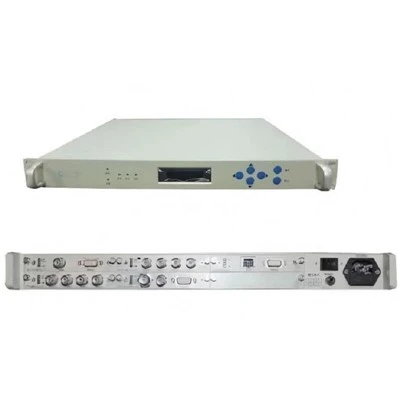
Quantum communication is this super – exciting area that’s been getting a lot of buzz lately. It’s all about using the principles of quantum mechanics to send information securely. Think of it as communication at the sub – atomic level. The key to making quantum communication work well is getting the time and frequency synchronization spot – on. But, as you might imagine, it’s not that straightforward.
One of the biggest challenges is dealing with quantum noise. In traditional communication systems, noise is a pain, but in quantum communication, it’s on a whole different level. Quantum noise can mess with the delicate quantum states that we use to send information. And when it comes to time and frequency synchronization, this noise can cause errors in the timing signals. For example, the qubits (the quantum bits) that carry information can have their states changed randomly due to noise. This means that the time at which we expect a particular qubit to hold a certain state might be off. And if our synchronization is based on these qubits’ states, well, we’re in trouble. As a Time and Frequency Synchronization supplier, we’ve got to figure out ways to filter out this quantum noise. We’re talking about developing advanced filtering algorithms and hardware that can distinguish between the real synchronization signals and the noise.
Another tough nut to crack is the distance factor. Quantum communication often aims to cover long distances, like sending information between different cities or even countries. But as the signal travels over these long distances, it degrades. And this degradation affects time and frequency synchronization. The time it takes for a quantum signal to travel can vary due to things like the refractive index of the medium it’s passing through. Fiber – optic cables, which are commonly used in quantum communication, can have different properties in different parts of the world. Some parts might be affected by temperature changes, which can cause the cable to expand or contract slightly. This, in turn, changes the speed at which the quantum signal travels. So, if we’re trying to synchronize two systems at different ends of a long – distance cable, we’ve got to account for all these variations. We’re constantly working on algorithms that can adjust for these distance – related issues. For instance, we can use feedback loops to measure the time delay between the two systems and then make real – time adjustments to keep the synchronization accurate.
The issue of scalability also poses a significant challenge. As quantum communication systems grow, with more and more nodes being added, the complexity of time and frequency synchronization skyrockets. Each node needs to be precisely synchronized with the others. In a small – scale quantum network, it might be relatively easy to manage the synchronization. But as we move towards large – scale, global quantum communication networks, it becomes a nightmare. There are so many variables to consider, such as the different clock rates of each node and the potential for interference between them. We’re actively researching ways to simplify the synchronization process for large – scale networks. One approach we’re looking at is using hierarchical synchronization methods. In this system, there are master clocks that control groups of slave clocks. This way, we can break down the complex task of synchronizing a large number of nodes into more manageable parts.
Quantum entanglement, which is a fundamental concept in quantum communication, also throws a wrench in the works. Entangled particles are linked in such a way that the state of one particle can instantly affect the state of another, no matter how far apart they are. While this is great for creating super – secure communication channels, it makes time and frequency synchronization tricky. The act of measuring the entangled particles can disrupt the synchronization. And since the whole point of quantum communication is to use these entangled states, we’ve got to find a way to measure them without throwing off the timing. We’re experimenting with non – invasive measurement techniques that can detect the state of the entangled particles without disturbing the synchronization too much.
As a Time and Frequency Synchronization supplier, we’re also dealing with the practical side of things. Quantum communication systems are often very sensitive and need to be carefully calibrated. This means that our synchronization products have to be extremely precise. We’ve got to build oscillators and clocks that can maintain a stable frequency over long periods. Even the slightest deviation in frequency can cause significant problems in quantum communication. And let’s not forget about the cost. Developing these high – precision synchronization products is expensive. We’ve got to balance the need for accuracy with the cost – effectiveness for our customers.
To address these challenges, we’ve been collaborating with research institutions and other companies in the quantum field. By sharing knowledge and resources, we’re able to come up with better solutions. We’re also investing a lot in research and development. Our team of engineers and scientists is constantly testing new ideas and technologies to improve our time and frequency synchronization products.
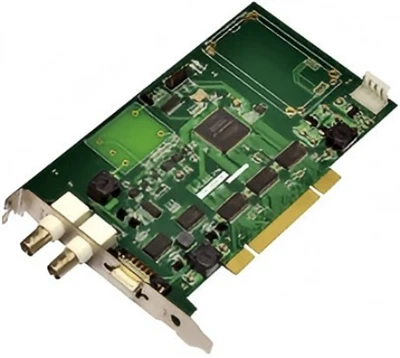
If you’re in the business of quantum communication, you know how crucial time and frequency synchronization is. And I’m confident that our experience and expertise in this area can provide you with the solutions you need. Whether you’re setting up a small – scale quantum network or planning a large – scale global project, we’ve got the products and services to keep your system running smoothly. So, if you’re interested in learning more about how we can help with your time and frequency synchronization needs, don’t hesitate to reach out. Let’s have a chat and see how we can work together to overcome the challenges of quantum communication.
Time and Frequency Synchronization References
- Nielsen, M. A., & Chuang, I. L. (2010). Quantum Computation and Quantum Information. Cambridge University Press.
- Gisin, N., Ribordy, G., Tittel, W., & Zbinden, H. (2002). Quantum cryptography. Reviews of Modern Physics, 74(1), 145 – 195.
- Yuen, H. P. (1983). Quantum least – squares estimation and associated quantum information measures. Physical Review A, 28(6), 3490 – 3500.
China Go-Sat Microwave Co., Ltd.
China Go-Sat Microwave Co., Ltd. is one of the most professional time and frequency synchronization manufacturers and suppliers in China. With abundant experience, we warmly welcome you to buy advanced time and frequency synchronization made in China here and get quotation from our factory. All customized products are with high quality and competitive price.
Address: No. 3908 ShiBo Avenue, Baqiao District, Xi’an, China
E-mail: sales@go-satcom.com
WebSite: https://www.go-satcom.com/
