If you’ve ever replaced a material cabinet because it warped in a humid workshop, chipped after one too many drops, or cracked under the weight of heavy tools, you know how frustrating it is to invest in storage that doesn’t last. As someone who’s been in the material cabinet supply game for 12 years, I’ve heard every complaint: “This should’ve held up longer,” “I’ve only had this for a year and it’s falling apart.” The truth is, durability isn’t just about picking a “sturdy” cabinet—it’s about intentional design, quality materials, and small, consistent choices that add up. Over the years, I’ve refined our manufacturing process by testing every tweak, collaborating with shop owners, and even dissecting failed cabinets to figure out exactly where things go wrong. Today, I want to share what I’ve learned, not just as a supplier, but as someone who’s watched my customers’ businesses rely on these cabinets day in and day out. Material Cabinet
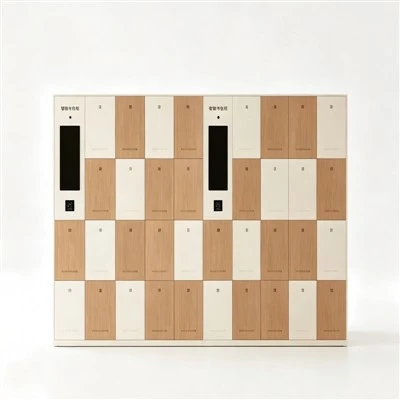
Start with the Core: Material Selection That Matches Its Environment
The biggest mistake I see new customers make is picking the cheapest wood or generic metal without considering where the cabinet will live. A material cabinet in a dry, climate-controlled office has totally different needs than one in a construction yard, a wet fabrication shop, or a basement with high humidity. Let’s break this down, because this is non-negotiable for durability.
For dry, low-moisture spaces (like indoor storage rooms or research labs), solid wood is a great option—if it’s the right type. I used to stock generic pine cabinets, but pine is soft, scratches easily, and expands with even minor humidity swings. Now, we use solid hard maple or red oak for these environments. Hard maple has a Janka hardness rating of 1,450 lbf, which means it resists dents from metal parts or falling tools far better than pine’s 380 lbf. Red oak is slightly softer (1,360 lbf) but cheaper, making it a solid pick if you’re on a budget, and it holds hardware tighter than pine too. The key here is that we never use “particleboard” or MDF for these cabinets—they’re made with wood fibers and resin, so they swell and fall apart if even a drop of water hits them, no matter what the label says.
Now, if you’re storing materials in a space with high humidity—think marine workshops, automotive paint shops, or outdoor storage (yes, some customers need cabinets outside)—wood isn’t going to cut it. We use 16-gauge cold-rolled steel for these, and that’s not the cheap steel you’d find at a big-box store. Cheap steel is thin, rusts within a year, and bends if you lean on it. Our 16-gauge steel is thicker, and we treat it with a two-step process: first, a phosphate coating to etch the surface and create a bond, then a electrostatic powder coat finish that’s baked on at 400 degrees. I once tested a batch of cabinets where half got a regular wet-paint finish and half got powder coat. After three years in a coastal workshop (salt air is brutal), the powder coat cabinets had zero rust spots—even on the edge of the doors where paint usually chips. The wet-paint ones had blistered and rusted across 30% of their surfaces. If you must use wood in a humid space, we now offer solid teak or pressure-treated Douglas fir, which have natural oils that resist moisture, but even those need a UV-resistant sealant reapplied every two years.
Wait, one more material note: hardware. Drawer slides, hinges, locks—this is what makes the cabinet work, and it’s the first thing to fail if it’s cheap. We switched from cheap zinc-plated slides to ball-bearing, stainless-steel slides three years ago, and it was a game-changer. Before that, customers were returning cabinets because drawer slides would seize up after 6 months. Stainless steel doesn’t rust, and ball-bearing slides can hold up to 100 pounds each, even when you’re yanking them open quickly to grab a part. I once had a customer who used our steel cabinets in a machine shop where he’d slam drawers shut all day, and after five years, the only thing he replaced was a single lock (and that was because he lost the key, not because it broke). That’s the kind of durability we’re after.
Design Choices That Prevent Failure Before It Starts
You can have the best materials in the world, but a bad design will still fall apart. Over the years, I’ve worked with our in-house design team to fix small, often overlooked flaws that lead to broken cabinets.
First, frame vs. frameless construction. A lot of budget cabinets use frameless designs, where the sides of the cabinet are just a thin panel attached to the top and bottom. The problem here is that if you load the drawer with too much weight, the sides bow out, and the drawer won’t close properly. All our standard cabinets use face-frame construction: a solid wood or steel frame around the front of the cabinet that adds rigidity. We reinforced every corner with corner blocks made from the same material as the cabinet, not just screws. On wooden cabinets, we use glued, pocket-hole screws so the corner is one solid piece, not two panels held together with a single nail. On steel cabinets, we TIG-weld every corner, then grind the weld smooth before coating it—no gaps where moisture can get in or stress can build up.
Another big design win: adjustable shelves that aren’t flimsy. I used to see cabinets with shelves that just sit on small plastic pegs. If you put a 50-pound box on one, the peg breaks, and the shelf collapses. Now, we use metal shelf supports that clip into holes every 2 inches, and the supports are 1-inch wide, not the tiny ¼-inch ones you get on cheap cabinets. For heavy-duty cabinets (like ones storing sheet metal or large tools), we add a center support beam running down the middle of the cabinet, so the shelf is held from both ends. I tested this by piling 150 pounds of steel plates on a shelf—no bowing, no shifting, nothing. Without that center beam, the shelf would have sagged 2 inches and probably cracked.
Don’t forget about weight distribution. A common mistake customers make is loading a cabinet too heavily on one side. We now add a “weight rating” to every cabinet we sell, and we label the shelf capacity, not just the total cabinet capacity. For example, a standard 36-inch wooden cabinet can hold 300 pounds total, but each shelf is rated for 100 pounds. That tells customers not to put all 100 pounds on the right shelf, but spread it out. We also add a reinforced base instead of just legs. A lot of cheap cabinets have four thin legs that can twist if you bump the cabinet. Our reinforced base is a solid frame that runs the full width and depth of the cabinet, so the weight is distributed across the entire bottom, not just four small points. That also makes the cabinet less likely to tip over, which is a safety bonus.
Maintenance: Small Habits That Extend Lifespan (Yes, Even Industrial Cabinets Need This)
I get it—if you run a busy workshop, you don’t want to have to polish or maintain your cabinets every month. But there are a few simple, 5-minute tasks that will make your cabinet last twice as long, and most of them are common sense once I point them out.
First, cleaning. For steel cabinets, wipe down the surface with a damp cloth once a month to remove dust, oil, and dirt. Oil and dirt can eat away at the powder coat over time, especially if you’re in a workshop where chemicals are present. If you spill something (like paint thinner or lubricant), wipe it up immediately. I’ve seen a steel cabinet ruined because a customer left a can of motor oil leaking on the shelf for three days—the oil seeped through the powder coat and left a permanent stain, and eventually caused rust. For wooden cabinets, avoid harsh cleaners (like ammonia or bleach) that can strip the finish. Use a mild soap and water, and dry it right away to prevent water spots. If you have a wooden cabinet in a dry space, I recommend reapplying a polyurethane seal every three years—this keeps the wood from drying out and cracking.
Second, lubricate the hardware. Drawer slides and hinges don’t need fancy lubricant—just a little light oil (like 3-in-1 or even WD-40 Specialist) twice a year. If you skip this, dust and metal shavings will build up in the slides, making them seize. I once had a customer who called complaining that his drawers wouldn’t open. When I visited his shop, I pulled out a drawer and found a year’s worth of metal shavings packed into the slide. A quick wipe with a rag and a drop of oil, and that drawer worked like new. It took him 2 minutes to do, and he would’ve had to replace the slides if he’d waited another month.
Third, adjust the doors. Over time, temperature changes can make cabinet doors warp slightly, so they rub or won’t close all the way. Most people don’t know that cabinet doors have small adjustable screws on the hinges that let you tweak the alignment in 30 seconds. We include a small Allen wrench with every cabinet, and I tell customers to check the door alignment once a quarter. It’s a tiny task, but it prevents gaps where dust or moisture can get in, and it keeps the doors from sagging and putting extra stress on the frame.
Real-World Proof: How These Changes Make a Difference
A few months ago, I visited a custom woodworking shop in Ohio that’s been using our material cabinets for seven years. The owner, Mike, told me he’d replaced four different cabinets from other brands before switching to ours. “The first cabinet I bought was a cheap oak one from a big box store,” he said. “After two years, the drawers wouldn’t close, the shelves sagged, and it had small cracks in the corners from moving it around the shop. Your cabinets? I’ve moved this one three times, stacked 80-pound lumber on the shelves, and the only thing I’ve done is oil the slides twice. It’s still like new.” That’s the kind of feedback that makes all the late nights testing materials worth it.
Another customer: a marine repair shop in Florida, where salt air is everywhere. They bought our powder-coated steel cabinets four years ago. The manager, Carlos, said, “We tried stainless steel cabinets from another supplier, but they still rusted on the edges. Yours? I check every month, and there’s not a single spot. We even store boat chemicals in there, and the finish hasn’t faded. It’s saved us thousands in replacements.”
These stories aren’t outliers—they’re the result of making intentional choices at every step, from material selection to design to maintenance. Durability isn’t about overbuilding to the point where the cabinet is twice as expensive as it needs to be. It’s about building a cabinet that’s tailored to how it’s used, with quality parts that don’t fail when you need them most.
At the end of the day, your material cabinet is an investment in your workflow. If it breaks, you’re not just out the cost of the cabinet—you’re losing time digging for parts, or waiting for a replacement, or dealing with safety hazards from a wobbly cabinet. That’s why we don’t cut corners on anything: from the steel gauge we use, to the welds, to the quality of the powder coat. Every choice is made because we know how much these cabinets matter to our customers’ businesses.
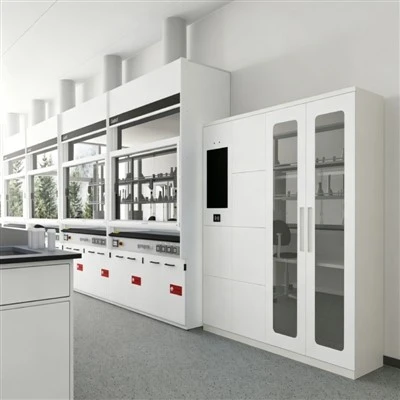
If you’re tired of replacing cabinets every few years, and you want something that will hold up to the daily wear and tear of your workshop, job site, or storage space, we’d love to help. We can walk you through material options based on your environment, show you design tweaks that fit your storage needs, and make sure you get a cabinet that works for you for decades.
References
- Janka Hardness Ratings for Common Wood Species, Wood Science and Technology Center, 2022.
- ASTM A109 Standard Specification for Steel, Strip, Carbon, Cold-Rolled, American Society for Testing and Materials, 2021.
- Powder Coating Durability Testing for Industrial Applications, National Association of Surface Finishers, 2023.
- Workshop Storage Durability Guidelines, Occupational Safety and Health Administration (OSHA), 2020.
Contact Note
School Lockers If you have questions about custom material cabinets for your space, or would like to discuss ordering options, reach out to our team to start a conversation tailored to your needs. We can provide detailed specifications, sample material swatches, and advice based on your specific storage and environmental requirements.
Hangzhou Dongjie Intelligent Technology Co., Ltd.
Hangzhou Dongjie Intelligent Technology Co., Ltd. is one of the most experienced material cabinet manufacturers and suppliers in China, also supports customized service. Please feel free to wholesale durable material cabinet made in China here from our factory. For quotation, contact us now.
Address: 1st Floor, Building 2, No. 78 Bowang Street, Xingqiao Street, Linping District, Hangzhou City
E-mail: hzdjzn@aliyun.com
WebSite: https://www.cndongjiesmart.com/
