Hey guys, it’s Jake from your go-to fiberglass products supplier—let’s cut to the chase today because I know half of you hit me up on Instagram or email asking: “How much do fiberglass products actually cost to maintain long-term?” And yeah, I get it—when you’re picking gear, patio stuff, or industrial parts, upfront price is one thing, but the hidden maintenance drain? That’s the stuff that sneaks up and blows your monthly budget. I’ve been working with fiberglass for 7 years now, so I’ve seen every win and fail when it comes to keeping these products running strong. Let’s break this down like we’re hanging out at my warehouse loading dock, no jargon, no fluff. Fiberglass Products
First off, let’s get one thing straight: fiberglass isn’t like wood that rots every time it rains, or metal that rusts before its second year. But “low maintenance” doesn’t mean “no maintenance”—that’s the number one mistake most new buyers make. I once had a guy buy a whole set of fiberglass dock floats from us, tell me he never needed to do anything to them, and text me 18 months later panicking because they had green slime growing all over and he thought they’d collapsed. Nope, just algae, which took me all of 5 minutes to explain and even send a free little cleaning kit to. So maintenance costs don’t just mean fixing broken stuff—they’re the small, regular tasks that keep your product from getting beat up, and the big stuff if you skip those small tasks.
Let’s start with the biggest category of fiberglass products most of my customers buy: marine gear. Boats, dock parts, fishing rod holders, even those little buoys. This is where I see the most variation in maintenance costs, because it all depends on how you use it. For a small recreational fishing boat made from fiberglass, let’s say a 16-foot center console that most weekend anglers get—what’s the annual maintenance? I tell my customers to budget $150-$300 a year for regular upkeep. Wait, why so low? Most of that is just soap and water. Yeah, that’s it. The only fancy part is a UV protectant wax, and we recommend the marine-grade stuff that’s $20 a bottle and lasts a whole season. If you keep it in a garage when you’re not using it, you can even stretch that wax to 18 months. The only time you’re spending more is if you hit something—like a piling or a rock—and scratch the gel coat (that’s the hard, shiny outer layer of fiberglass, by the way). A small scratch kit from our shop is like $40, and a big scratch that needs professional repair is maybe $100-$200, not thousands like metal boats. I’ve had a few commercial fishing guys come through, though—their fiberglass trawlers are used 12 months a year, saltwater nonstop. Their maintenance jumps to $500-$800 a year, mostly because of frequent cleaning (salt water eats at any surface if you leave it) and checking for tiny, almost invisible stress cracks. Those cracks don’t sound like a big deal, but if you let salt water get in, they can grow, and fixing those before they turn into something worse is way cheaper than replacing a whole section.
Next up, patio and outdoor living fiberglass stuff—furniture, planters, deck railings, that whole backyard vibe. This is my favorite category because it’s the easiest to maintain. Most of my residential customers here pay $50-$150 a year, max. Again, soap and water is 80% of it. The only time you need extra stuff is if you’re in an area with really intense sun (like Arizona or Florida) — a quick spray of UV shield once a year, $15, and that’s it. I had a customer last year who bought our fiberglass patio set and called me 2 years later saying he thought he’d wasted money because it had “faded.” Turns out he was using a regular car wax that wasn’t made for fiberglass gel coat. We sent him the right UV protectant, and it looked brand new in a week. The only big cost I see here is if someone leaves their fiberglass planter sitting in standing water all winter—they get a little mold or mildew, and sometimes that eats at the gel coat if you don’t scrub it. A bottle of mildew remover is $10, way cheaper than buying a new planter.
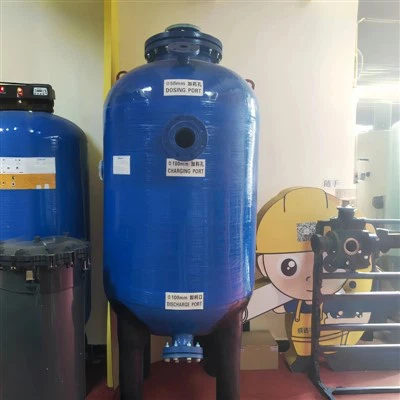
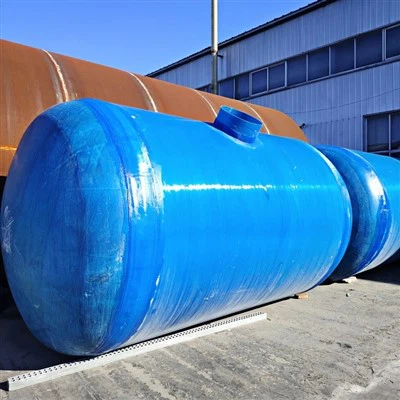
Then we get into industrial fiberglass products, which is a whole different ballgame. These are the stuff my construction and manufacturing clients buy—fiberglass piping, safety railings, chemical tanks, even truck bed liners. Maintenance here varies way more because it depends on what the product is holding or exposed to. Let’s take a chemical storage tank first: if it’s storing non-corrosive stuff like water or fertilizer, annual maintenance is like $200-$400, mostly pressure testing to make sure there are no leaks. But if it’s holding harsh chemicals like acids or solvents, you’re looking at $800-$1,500 a year, because you have to do monthly inspections for any surface degradation, and maybe a recoat every 5 years or so. That recoat is $3,000-$5,000, but spread over 5 years that’s like $600-$1,000 a year, so it adds up. For fiberglass truck bed liners, which are super popular with contractors, maintenance is almost nothing—maybe $100 a year for a touch-up if you drag something sharp and scratch it, but that’s way less than the $2,000 it would cost to replace a steel bed that rusts out in 3 years.
Wait, let’s talk about the one thing that surprises everyone: the cost of skipping maintenance. A lot of guys think “fiberglass is unbreakable” so they put it off, and that’s where they get hit with crazy costs. I had a commercial dock client who put off cleaning his fiberglass floats for 3 years—algae and barnacles grew on them, and the barnacles actually started eating through the gel coat. He ended up having to replace 80% of his floats for $12,000, instead of the $300 a year it would’ve cost to scrape and seal them. That’s the biggest lesson here: small, regular tasks are way cheaper than emergency replacements.
Also, let’s debunk a myth I hear all the time: “Fiberglass is totally zero-maintenance.” No. Zero-maintenance products don’t exist. Even concrete needs sealing every few years, even plastic gets brittle in the sun. Fiberglass just needs way less, and way cheaper, stuff than other materials. A quick comparison: last year a customer brought me a wooden patio set he’d had for 5 years, rotted, warped, total cost to repair and re-stain it was $800. His friend bought our fiberglass set for $1,200 total upfront, and after 5 years he’d spent $200 on maintenance. That’s a $200 difference vs. $800, and his fiberglass set still looked almost new. Metal fence? Rusts in 7-10 years, costs $1,500-$2,500 to replace. Fiberglass fence? $2,000 upfront, maybe $100 over 10 years, no rust.
Now, let’s talk about what factors actually drive maintenance costs, because not all fiberglass is the same. First, the gel coat quality. The cheaper fiberglass products you find at big box stores have thin gel coat that chips easy, fades fast. Our products use 20-mil marine-grade gel coat, which is twice as thick as most budget stuff, so it holds up way longer. That means you spend less on repairs over time, even if the upfront cost is a little higher. Second, the environment. If you’re in a salty coastal area, that’s way harder on fiberglass than a dry midwestern town. Salt gets into tiny cracks, speeds up UV degradation. We always recommend a little extra maintenance for coastal customers—monthly rinsing, more frequent UV waxing, but even then it’s still way cheaper than alternatives. Third, how you use the product. If you’re dragging a fiberglass boat up a rocky beach every weekend vs. keeping it on a lift, that’s a huge difference in repair costs.
Wait, let’s give you a real, concrete (pun intended) number example, because numbers make it real. Let’s take three 10-year ownership scenarios, same size deck railing for a house:
- Wood railing: Upfront $800, annual maintenance $300 (staining, sealing, repairing rot). Total over 10 years: $3,800.
- Aluminum railing: Upfront $1,500, annual maintenance $50 (scrubbing rust spots, repainting). Total over 10 years: $2,000.
- Our fiberglass railing: Upfront $1,800, annual maintenance $20 (soap and water, UV wax every 2 years). Total over 10 years: $2,000.
Oh, so upfront is a bit higher, but total over time is same as aluminum, way cheaper than wood. That’s the math most people don’t do before they buy. They see the $800 wood and jump, but 10 years later they’re out another $800 to replace it, while the fiberglass is still holding strong.
Another thing: hidden maintenance costs I see. For example, fiberglass insulation? Wait, no, our line of fiberglass building panels—if you don’t seal the edges, moisture can get in and cause mold. That’s a $20 sealant tube, way cheaper than mold remediation which can run $1,000+. Or for fiberglass RV parts, which are super popular right now—skirting, roof panels. People often forget to check the seals around the roof for leaks, and a small leak can turn into water damage that costs $5,000 to fix. But that’s not the fiberglass being bad, that’s not doing the 10-minute monthly check.
I’ll be real with you, sometimes I get calls from people who say “fiberglass is a waste because I paid for repairs.” 9 times out of 10, they bought the cheapest fiberglass they could find, skipped maintenance, or used it for something it wasn’t meant for. Our products come with a free care guide when you buy, and we always send a quick text reminder after 6 months to check in—most of the time that’s all it takes. We even have a free Facebook group for customers to ask questions, so you don’t have to guess what to do.
Now, let’s wrap this up with what you should actually budget, depending on what you’re buying, to make this easy:
- Recreational marine gear (small boats, fishing accessories): $100-$300/year
- Patio/residential outdoor furniture/planters: $50-$150/year
- Residential railings, deck parts: $20-$100/year
- Industrial non-corrosive tanks/piping: $200-$500/year
- Industrial corrosive-use fiberglass parts: $600-$1,500/year
- Truck bed liners, trailer parts: $50-$200/year
And remember, that’s all in addition to the occasional big job, like recoating a tank every 5 years, which is spread out so it doesn’t hit you all at once. If you compare that to any other material, it’s way lower. Metal has rust repairs, wood has rot, plastic gets brittle and cracks. Fiberglass just doesn’t have those problems as often.
If you’re on the fence about buying fiberglass, or you already own some and are wondering what you need to do to keep it going, hit me up. I don’t do pushy sales stuff—just honest answers. Whether you need a quote for a new product, help figuring out what maintenance your current fiberglass needs, or even a repair tip, my team and I are here to help. We work with everyone from weekend homeowners to big construction companies, so no job is too small or too big.
Don’t let anyone tell you fiberglass is high-maintenance—it’s just different. A little time and $20 here and there goes a long way, and saves you thousands down the line. That’s the real value of fiberglass, right?
FRP Mold References:
- American Boat and Yacht Council. (2022). Fiberglass Boat Maintenance Guidelines.
- Fiberglass Institute. (2021). Long-Term Performance and Maintenance of Fiberglass Composite Products.
- Outdoor Power Equipment Institute. (2023). Maintenance Cost Comparison of Deck Construction Materials.
- Occupational Safety and Health Administration. (2022). Fiberglass Industrial Product Maintenance Protocols.
Hebei Weihan Environmental Protection Equipment Co., Ltd.
We’re well-known as one of the leading fiberglass products manufacturers and suppliers in China, featured by quality products and good service. Please rest assured to buy customized fiberglass products at competitive price from our factory. Contact us for more details.
Address: No. 666 Chuangye Road, Zaoqiang County, Hengshui City, Hebei Province
E-mail: weihanmachine@gmail.com
WebSite: https://www.whanfrp.com/
