Hey there, valve lovers and process engineers! If you’ve ever stared at a control valve spec sheet and thought, “What on earth does ‘flow characteristic’ even mean beyond the basic open/shut stuff?” — you’re not alone. I’ve been selling control valves for 8 years now, and I still get new customers hitting me up going, “Wait, so the flow curve isn’t just a random line on a chart?” Today, I’m breaking this down like I would for a kid who’s never seen a valve before (minus the legos, sorry), because let’s be real: knowing these flow characteristics doesn’t just make you look smart at meetings — it keeps your process from going haywire, and saves you from throwing unnecessary parts at a problem. Control Valve

First off, let’s keep it simple: what’s a flow characteristic, exactly? At its core, it’s the relationship between how much you open the valve (that’s the valve’s “travel,” like 0% closed to 100% wide open) and how much stuff — liquid, gas, whatever — flows through it. I see so many people treat this like a one-size-fits-all thing, but here’s the tea: your process isn’t generic, so neither is your valve. Pick the wrong characteristic, and you’ll end up with a system that’s either underflowing when you need it or jittery like a coffee-fueled intern every time you nudge the setpoint.
Let’s start with the big three that everyone learns in valve school, but most people mix up because they forget when to use each. First up: Linear Flow Characteristic. This is the straight line one. If you graph it, 20% valve open = 20% flow, 50% open = 50% flow, 100% open = full flow. Sounds perfect, right? But wait — here’s the catch that trips everyone. Linear valves suck when you have varying pressure drops in your system. Like, say you’re regulating flow to a reactor, and your pump’s pressure changes as the tank drains. At low valve openings, a little tweak to the valve (like moving it from 10% to 15%) will make a massive jump in flow, because the pressure difference across the valve is huge. That’s why you get that overshoot that has your DCS alarm going off at 2 a.m. But when you’re at high openings — like 80% to 100% — the linear valve is basically a firehose. A tiny nudge there barely changes flow at all. It’s like trying to steer a semi with a toothpick at highway speed — not great. So when do you actually use linear? From where I stand, linear is for systems where the pressure drop across the valve is constant, or super close to it. Like if you’re working with a fixed-speed pump that keeps steady pressure, or a small closed loop where friction doesn’t change much. I sold a linear globe valve last month for a lab-scale distillation unit, and it worked like a charm because their pressure drop stayed dead consistent the whole run.
Next, Quick-Opening Flow Characteristic. This is the “all or nothing” guy of the bunch. If you open it 20%, you get 80% flow, 50% open is basically full flow — it’s a steep curve that plateaus fast. Why is this even a thing? Most people only associate control valves with modulating flow, but sometimes you just need a valve that fully opens or closes, no in-between. Like, if you’re filling a tank, you don’t need to tweak flow halfway — you just need it open fast to get the tank filled, then shut tight when it’s full. Quick-opening valves are usually the ones with a big, straight port or a V-notch that gets wide almost immediately. I see these used a lot in on/off applications, drain lines, or safety shutoffs. A common mistake here is trying to use a quick-opening valve for modulating control — don’t do it. If you need to adjust flow at 30% opening, this valve will give you way more than you bargained for, and you’ll be chasing your tail trying to stabilize it. I had a customer call me last year saying their quick-opening valve was “jumpy” on a water line, and turns out they were using it to modulate flow instead of just open/close — easy fix, swapped it for a linear valve, and their issues vanished.
Now the MVP of the bunch: Equal Percentage Flow Characteristic. This is the one that’s made for variable systems, and it’s the one I recommend to 70% of my customers who aren’t sure what they need. Let’s talk about what it actually does: every 10% increase in valve travel gives an equal percentage increase in flow. Wait, let’s make that concrete: if at 20% open, flow is 10 GPM, then at 30% open, flow is 12 GPM (that’s 20% increase), at 40% open it’s 14.4 GPM, another 20% jump. At high openings, like 80% to 90%, that same 10% travel gives a way bigger flow bump — like from 50 to 100 GPM. Why is this good? It compensates for changing pressure drops. Remember that linear valve at low openings being too sensitive? Equal percentage is the opposite: it’s super gentle when the valve is almost closed, so you can tweak it tiny bits without blowing out flow. And when you’re at high openings, where pressure drops are smaller, it gives you the flow you need. That makes it perfect for almost any process where pressure or flow varies: HVAC systems, chemical processing, anything with centrifugal pumps (which have changing pressure as flow changes). I’ve sold equal percentage butterfly valves, globe valves, even plug valves for everything from food and beverage lines to oil and gas processing — and I can count on one hand the times a customer came back saying it was wrong. The only time I avoid equal percentage? If your pressure drop across the valve is super tiny and almost constant — linear is cheaper and works just as well there.
Wait, but hold on — that’s not all. There are other, more niche flow characteristics that come up when you’re dealing with weird systems, and I always tell customers not to sleep on these because they can save your project. Let’s talk about Modified Equal Percentage. That’s basically an equal percentage curve that gets flatter at the top end, so it doesn’t give you that sudden big flow jump at 90% open. Why would you need that? If your system has a maximum flow that you can’t exceed — like a line that can’t handle more than 100 GPM, because your downstream pipe is sized for that. A standard equal percentage might push you over that limit when you open it wide, so modified equal percentage cuts that peak off. I used modified equal percentage on a pharmaceutical line last quarter — they couldn’t have flow spike even a little, because it would mess up their reaction purity. Worked like a dream.
Then there’s Hyperbolic Sine, or maybe parabolic? Wait no, let’s get that right — Parabolic is a flat line in the middle, steeper at low and high openings. It’s kind of a middle ground between linear and quick-opening. I barely use these, honestly — most people go for equal percentage or linear, but I have a few water treatment customers who swear by them for filtering lines, where they need a bit more control at the low end than linear but not as much flow at 20% open as quick-opening. It’s a niche one, but good to know exists if you’re working with those types of systems.
Okay, let’s get real for a second — why does any of this matter to you, the person buying valves? I’ve seen way too many projects blow their budget or shut down early because someone picked the wrong flow characteristic. Last year, I had a refinery customer that installed linear valves on their crude oil transfer lines. As the crude heated up and flowed more, the pressure drop across the valves dropped, so the linear valves couldn’t keep up — they were overshooting flow by 15% every time the setpoint changed, leading to unnecessary wear on pumps and a 10% drop in their throughput. Swapping them out for equal percentage valves fixed it in a week, and they saved like $20k a month in wasted energy. That’s not a sales pitch — that’s the kind of thing I see every week, and it’s why I spend 20 minutes on the phone with every new customer asking about their system, not just selling the cheapest valve I have.
Wait, another thing that a lot of people don’t talk about: the flow characteristic is tied to the valve trim, right? The trim is the guts of the valve — the plug, the seat, the V-notch. Equal percentage valves usually have a notched plug, or a segmented V-notch for ball valves. Linear valves have a flat plug that moves straight up and down, so flow increases evenly. Quick-opening has a big, round port that opens fast. If you swap trim, you can change the flow characteristic of a valve without replacing the whole body — that’s a huge tip for retrofits. I did a retrofit last year for a brewery that had a bunch of old linear valves that were acting up. We just swapped their trims to equal percentage, and they worked fine for another 5 years instead of replacing all the valves. Saved them like $50k, easy.
Let’s also bust a common myth: people think “control valves” are only for big industrial jobs, but no — even small process lines, like 2-inch lines for a pilot plant, need the right flow characteristic. I get so many small biotech startups that come to me with a tiny line that’s supposed to control flow of a reagent, and they picked a quick-opening valve because it was cheap, and then wonder why their reagent dose is all over the place. I tell them, “You need modulating control here, not on/off,” and swap them to an equal percentage trim, and suddenly their process is stable. It’s not rocket science, but it’s easy to get wrong when you’re new to this.
Another myth: the flow characteristic is fixed. Wait, no — wait, actually, for most standard valves it is, but there are smart valves with digital positioners that can adjust the flow curve automatically. Like, if your pressure drop changes mid-process, you can program the positioner to tweak the valve’s travel to keep the flow characteristic consistent. That’s a game-changer for dynamic systems where pressure changes a lot, like solar thermal lines or variable-speed pump systems. I sell a lot of smart valves with adjustable flow curves for those apps, because they eliminate the need to swap trims if your process changes later. That’s one of the reasons I love working with these — technology has come a long way, so you don’t have to lock yourself into one curve forever.
Wait, let’s circle back to the practical stuff. How do you pick the right one, step by step, so you don’t make that mistake? First, figure out if your valve is going to be modulating (adjusting flow up and down) or on/off. If it’s on/off, quick-opening is almost always the right call. If it’s modulating, next check if your system’s pressure drop across the valve stays constant or changes. If it’s constant (fixed pump, steady process), linear works. If it changes (most processes, tbh — pumps speed up, tanks drain, pipes get fouled), equal percentage is your go-to. If you have a hard max flow you can’t exceed, go modified equal percentage. If you’re unsure, pick equal percentage — it works in like 70% of all modulating applications, and it’s way more forgiving than linear.
I’ve been doing this long enough that I can tell just by hearing a customer’s process what flow characteristic they need, but I always recommend testing if you’re on the fence. Most good valve suppliers (wink, nudge) will send you a sample or do a small flow test to confirm before you buy. I even did a test for a customer last month who was torn between linear and equal percentage — we hooked up a test rig with their actual system pressure, ran both curves, and they saw that equal percentage gave them way more consistent control. They ended up buying 12 valves, and they’ve been happy ever since.
Let’s be real, I’m a control valve supplier, so part of this is me telling you that picking the right flow characteristic is non-negotiable for your process. I can sell you any valve, but I’m not going to sell you one that’s wrong for your job — that’s how you get a bad reputation, and I’ve worked too hard to build this business on people coming back to me for repeat orders. I’d rather take 10 minutes to ask you about your system, tell you which flow characteristic works best, than have you call me in 6 months mad that your valve is causing issues.
If you’re reading this and you’re in the middle of designing a new process, or troubleshooting a valve that’s being weird, let’s chat. I’ve seen every flow characteristic mistake in the book, and I can help you pick the right one for your system, no sales pressure, no confusing jargon. Just tell me what you’re working on, and I’ll walk you through it step by step.
Wait, before I sign off, let’s recap the key points so you don’t have to go back and re-read: flow characteristic is the relationship between valve opening and flow; linear is straight, for constant pressure drop; quick-opening is all or nothing, for on/off; equal percentage is the workhorse, for variable pressure drops; modified equal percentage is for max flow limits. Don’t mix them up, don’t use a one-size-fits-all approach, and if you’re confused, reach out. That’s the stuff that keeps processes running smooth, and saves you from a lot of headaches.
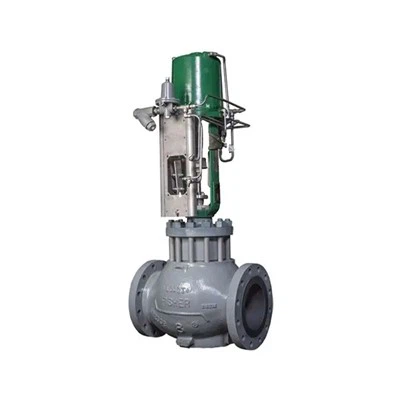
And hey, if you’ve had a bad valve experience because of the wrong flow characteristic, drop a line — I love hearing those stories, it helps me teach other customers what to avoid. Now, if you’re ready to stop guessing and get the right control valve for your process, just get in touch for a consultation. No fine print, no pushy sales calls, just actual advice from someone who’s been doing this for years.
Valve Positioner Accessories References:
- Control Valve Handbook, 5th Edition, International Society of Automation (ISA)
- Process Control: Valves and Actuators, B.G. Lipták, CRC Press
- Flow Control in Industrial Processes, P.M. Vilar, John Wiley & Sons
Century Weiye (Dalian) Control Equipment Co., Ltd.
As one of the leading control valve manufacturers and suppliers in China, we warmly welcome you to buy discount control valve in stock here from our factory. If you have any enquiry about quotation, please feel free to email us. Quality products and reasonable price are available.
Address: 2205, Building 8, Red Star International, Ganjingzi District, Dalian City, Liaoning Province
E-mail: serena@valvesjwy.com
WebSite: https://www.valve-sjwy.com/
